



SHACMAN Deploys 1,300+ Trucks to Drive Trans-Guinean Railway Project
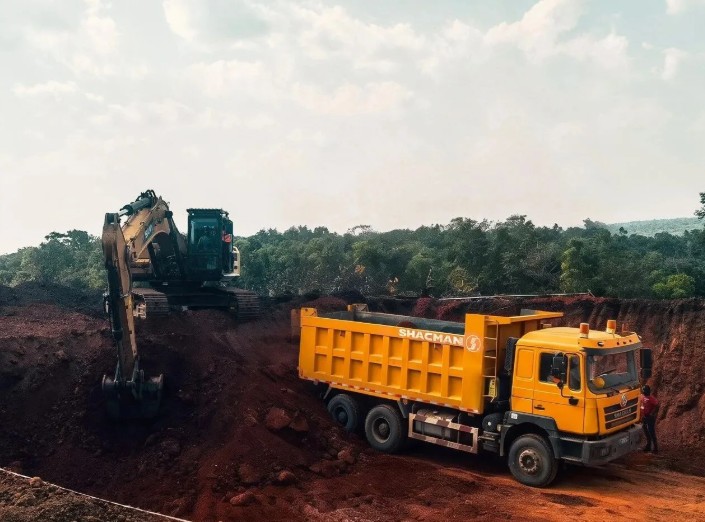
At dawn, the low rumble of diesel engines cuts through the mist rising over Guinea’s Simandou hills—a sound now synonymous with progress. Here, over 1,300 SHACMAN heavy-duty trucks are working around the clock to push the Trans-Guinean Railway toward full operation, a 650-kilometer lifeline connecting one of the world’s largest untapped iron ore deposits to the Port of Morebaya. For locals watching convoys snake through once-remote terrain, the trucks aren’t just machines—they’re the pulse of a project set to reshape Guinea’s economy.
A Fleet Built for Guinea’s Terrain
The railway, critical to unlocking 60 million tons of annual iron ore exports (15% of global high-grade steel demand), faces steep challenges: tropical rains, rocky soil, and temperatures topping 35°C. SHACMAN’s X3000, H3000, and F3000 models were chosen for their resilience. Engineers on-site report the trucks have maintained 99.8% uptime—even after months of hauling ore through muddy switchbacks—cutting operational costs by 20% compared to older fleets. “These trucks don’t break down. They just keep moving,” said Mamadou Diallo, a driver who’s logged 8,000 km in his X3000 since joining the project last year.
More Than Machinery: Partnerships on the Ground
SHACMAN’s role extends beyond delivering trucks. The company has trained 200 Guinean drivers and mechanics, partnering with local firms to build maintenance hubs along the route. This aligns with Guinea’s Vision 2035, which aims to create 50,000 jobs and cut logistics emissions by 30%. “We didn’t just drop trucks here,” said Fatoumata Keita, head of the project’s community liaison team. “SHACMAN taught us how to keep them running—for the long haul.”
Leadership on the Front Lines
Speaking from the project’s command center near the mine, Feng Zhou, director of SHACMAN’s engineering research institute, emphasized the bigger picture. “This isn’t just about moving ore. It’s about connecting Guinea to global markets,” he said, gesturing to a map dotted with truck routes. “Our goal by 2026 is to grow our African fleet to 2,500 units—proving that Chinese engineering can adapt to any challenge, anywhere.”